
Slab Leak Repair in Odessa, TX
Expert slab leak repair and reroute services for Permian Basin homes built on concrete foundations.
Fast Answer
Slab Leak Repair Cost in Odessa TX
| Service | Typical Cost Range |
|---|---|
| Slab leak detection | $300 - $600 |
| Spot repair (single leak through slab) | $800 - $2,000 |
| Partial reroute (one line bypassed) | $1,200 - $2,800 |
| Full supply line reroute (whole home) | $3,500 - $7,500 |
| Slab leak repair with concrete and floor patching | $1,500 - $3,000 |
These are typical ranges for our Odessa–Midland service area. Call (432) 290-8511 for a free estimate.
Why Slab Leaks Are So Common in Odessa
Most homes in Odessa and the Permian Basin are built on concrete slab foundations. The water supply lines and sometimes drain lines run through or beneath this slab. The expansive clay and caliche soil in our region swells when it absorbs moisture and shrinks during dry spells.
This seasonal movement applies pressure to pipes embedded in and beneath the concrete, stressing joints and bending rigid pipe materials. Copper pipes, which were the standard supply line material for decades, are also attacked from the outside by the alkaline minerals in local soil and from the inside by hard water scale. The result is pinhole leaks, split fittings, and cracked pipe walls that release water under your foundation.
According to the Insurance Institute for Business and Home Safety, the average water damage insurance claim is $11,098. In Odessa, slab leaks are one of the most common sources of those claims.
Signs You May Have a Slab Leak
Slab leaks often go undetected for weeks or months because the water is hidden beneath the concrete. The first clue is usually a water bill that climbs without explanation. You may feel a warm spot on the floor if a hot water line is leaking.
Standing water or damp carpet in a room without an obvious source is another strong indicator. Some homeowners hear the faint sound of running water when everything is turned off. In severe cases, the foundation may develop new cracks, doors may stick, or baseboards may show water staining.
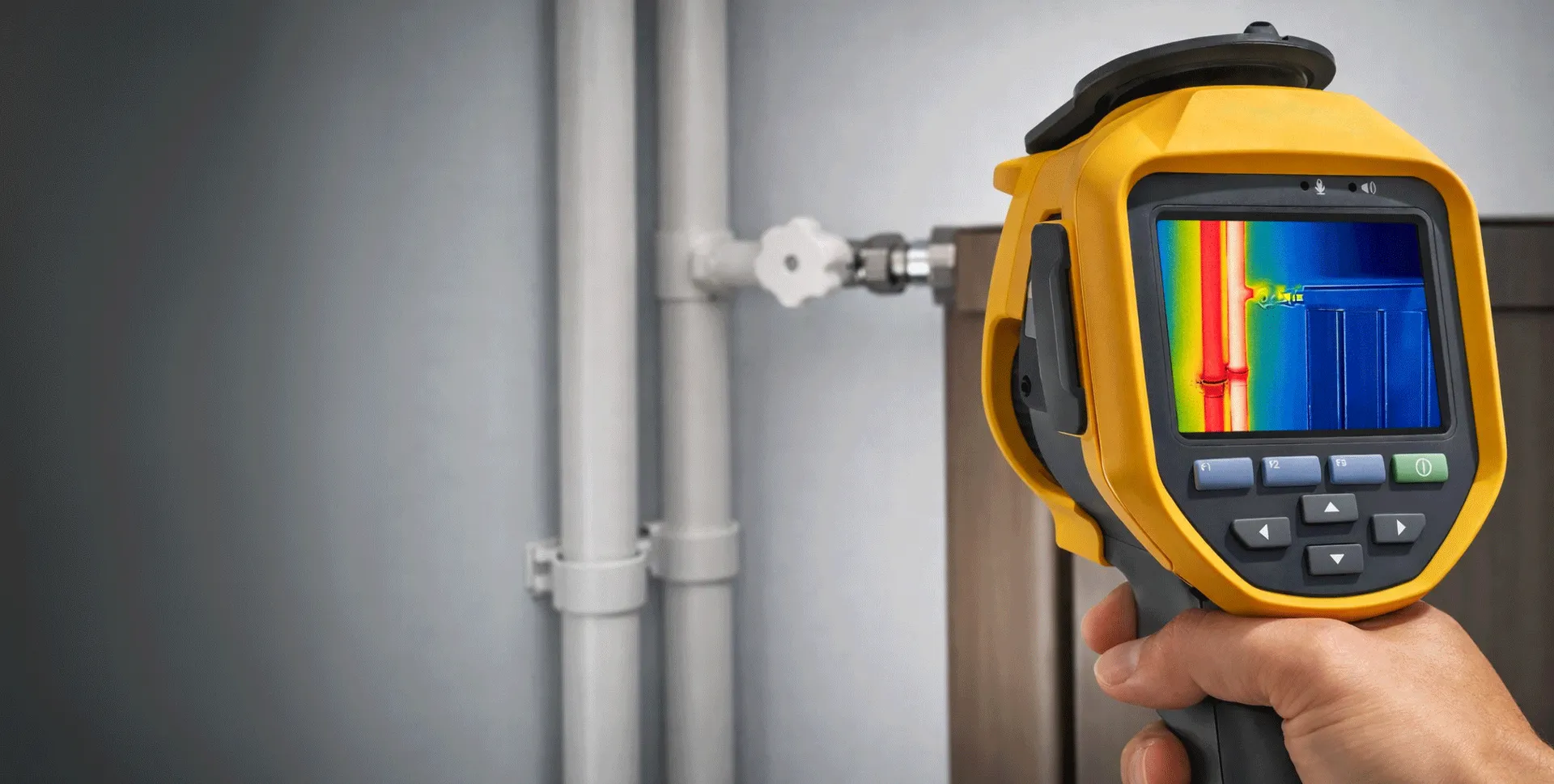
Our team recently diagnosed a slab leak in a 1960s home off Andrews Highway. The homeowner had been placing towels around the base of the toilet, assuming a bad wax ring. Our thermal camera showed the moisture was actually coming from a hot water line leak three feet away.
Without detection, they would have replaced the wax ring and still had the problem. We see the same pattern with slab leak repair in Midland TX, particularly in 1950s and 1960s east-side neighborhoods where 60-plus-year-old copper has been embedded in reactive clay since the home was built — the only difference is that Midland's settlement-related yard line failures in newer Loop 250 subdivisions add a second failure mode that homeowners often confuse with a slab leak until we pressure-test the supply line. Call Resolv Services at (432) 290-8511 if you notice any of these signs.
Slab Leak Repair Options
There are three main approaches to fixing a slab leak. A spot repair involves jackhammering through the slab at the leak location, repairing or replacing the damaged pipe section, and patching the concrete. This is the least expensive option and works well when the rest of the pipe is in good condition.
A partial reroute abandons the damaged section of pipe under the slab and runs a new line through the wall or attic to bypass the problem area. This avoids opening the slab and is a good choice when the leak is in a hard-to-reach location. A full reroute abandons all under-slab plumbing and runs entirely new supply lines through the attic or walls using PEX-A tubing.
This is the most comprehensive solution and makes sense when the under-slab pipes have widespread corrosion and future leaks are likely. Our licensed plumbers evaluate the full picture and recommend the approach that gives you the best value for your situation.
The Spot Repair Process
For a spot repair, we begin by using electronic leak detection to mark the precise leak location on the slab surface. We then cut through the flooring material and jackhammer the concrete to expose the pipe. After removing the damaged section, we replace it with new copper or PEX-A pipe and test the repair under full system pressure.
Once we confirm the repair holds, we pour new concrete to patch the slab and allow it to cure. The homeowner then handles flooring restoration. Spot repairs typically take one day and cost significantly less than a reroute.
However, if our detection process reveals that the surrounding pipe is heavily corroded, we will discuss a reroute option to prevent a repeat slab break in the near future.
Why We Recommend PEX-A for Reroutes
When we reroute supply lines out of the slab, we use PEX-A tubing because it is flexible, resists scale buildup, handles freeze-thaw expansion without cracking, and has fewer fittings than rigid pipe because it can bend around corners. Fewer fittings mean fewer potential leak points. PEX-A also does not corrode the way copper does in Odessa's hard water and alkaline soil conditions.
We run the new lines through the attic with proper insulation to protect against the rare West Texas hard freeze. The result is a plumbing system that is accessible for future maintenance, not buried in concrete where the next repair means jackhammering again. Call (432) 290-8511 for a slab leak evaluation and we will walk you through all your options.
How Slab Leak Repair Works
Leak Detection
We use thermal imaging cameras, acoustic listening equipment, and pressure tests to locate the slab leak without guessing. We mark the exact location on the floor before any concrete work begins.
Repair Strategy
Based on the leak location, pipe condition, and your budget, we recommend spot repair, partial reroute, or full reroute. We explain the pros and cons of each option with clear pricing.
Access and Repair
For spot repairs, we jackhammer a targeted section of slab to access the pipe. For reroutes, we run new PEX-A lines through the attic or walls. Every connection is made with approved fittings and methods.
Pressure Testing
After the repair or reroute, we pressure-test the entire affected system at 80 PSI for a minimum of 15 minutes. We do not close walls or patch concrete until the test confirms zero pressure drop.
Restoration and Cleanup
We patch the concrete slab for spot repairs, seal wall penetrations for reroutes, and clean up all debris. We leave the work area ready for flooring or drywall restoration.
Spot Repair vs. Pipe Reroute for Slab Leaks
| Factor | Spot Repair | Pipe Reroute |
|---|---|---|
| Best for | Single leak on otherwise healthy pipe | Multiple leaks or widespread pipe corrosion |
| Cost | $800 - $2,000 | $1,200 - $7,500 depending on scope |
| Disruption | Jackhammer one area; flooring repair needed | No slab work; minor wall and ceiling openings |
| Future risk | Other sections may fail if pipe is old | All new pipe eliminates future under-slab failures |
| Timeline | 1 day | 1-2 days |
| Pipe material after repair | Copper or PEX-A splice in slab | PEX-A through attic or walls |
More Leak Detection Services
Resolv Services provides slab leak repair as part of our leak detection and repairs across West Texas.
Frequently Asked Questions About Slab Leak Repair
Many policies cover the resulting water damage but not the plumbing repair itself. Some policies do cover the cost of accessing the pipe, which includes concrete removal and restoration. Check with your insurance carrier. Resolv Services provides documentation and photos to support your claim.
A spot repair is usually completed in one day. A partial reroute takes 1 to 2 days. A full supply line reroute for a typical Odessa home takes 1 to 2 days. We provide a specific timeline after evaluating your situation.
Yes. Water leaking under your slab saturates the clay soil and causes uneven expansion. Over time, this leads to foundation heaving, cracking, and shifting. Fixing slab leaks promptly prevents foundation damage that costs far more to repair than the plumbing work.
It depends on the pipe condition. If the rest of the under-slab plumbing is in good shape, a spot repair is effective and affordable. If the pipe shows widespread corrosion or you have had multiple slab leaks, a reroute eliminates the risk of future under-slab failures. We will give you an honest recommendation.
Need Slab Leak Repair?
Get a written estimate for professional slab leak repair in the Permian Basin.
(432) 290-8511