
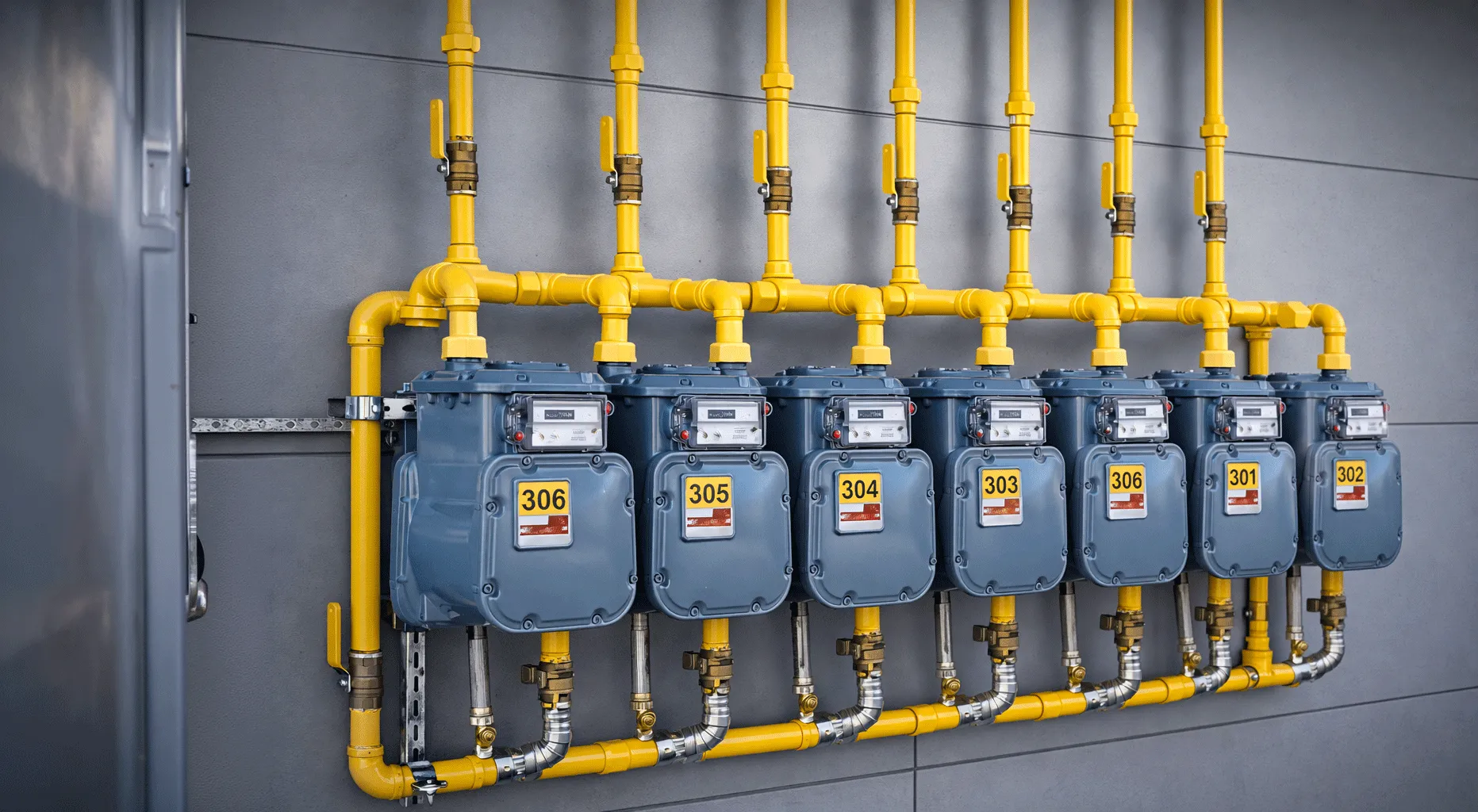
Gas Line Installation & Repair
Licensed gas line services for homes and businesses. Resolv Services handles gas leak detection, line repair, new installations, and generator hookups with safety as the top priority.
Fast Answer
Find Gas Services Near You
Select your city for local pricing, availability, and service details.
Gas Line Service Costs
| Service | Typical Cost Range |
|---|---|
| Gas leak detection and repair (single leak) | $200 - $500 |
| New gas line to kitchen range (short run, same floor) | $300 - $600 |
| New gas line to outdoor grill or fire pit | $400 - $800 |
| Gas line to standby generator | $500 - $1,200 |
| Gas line to pool or spa heater | $500 - $1,000 |
| Gas appliance connection (dryer, range, etc.) | $150 - $350 |
| LP-to-natural gas conversion (per appliance) | $150 - $300 |
| Whole-home gas line replacement (corroded black iron) | $2,000 - $5,000+ |
| Gas system inspection and leak check | $100 - $200 |
These are typical ranges for our West Texas service area. Final cost depends on line length, pipe material, access conditions, and the number of appliances served. We provide a written estimate before work begins.
Signs You Need Gas Services Service
Natural gas is odorless, but utilities add mercaptan to give it a distinctive rotten-egg smell so leaks can be detected. Any hint of this odor means you should leave the building and call 911 immediately.
A hissing sound near a gas pipe, fitting, or appliance connection indicates gas is escaping through a gap or crack in the line.
An underground gas line leak displaces oxygen in the soil, killing grass and plants above the leak while surrounding vegetation stays green.
Gas appliance burners should produce a steady blue flame. Yellow or orange flames indicate incomplete combustion, which can produce dangerous carbon monoxide.
A pilot light that will not stay lit may indicate a faulty thermocouple, but it can also signal a gas supply issue or a drafting problem that needs professional diagnosis.
An unexplained spike in your gas bill can indicate a leak in the system that is allowing gas to escape continuously, even when no appliances are running.
These symptoms can indicate carbon monoxide exposure from a gas appliance that is not venting properly. Open windows, leave the building, and call for help.
Visible corrosion on black iron gas pipes, particularly in homes built before 1985, means the pipe walls are thinning and a leak is likely if the pipe is not replaced.
Gas Services Services We Provide
Gas Leak Detection →
Our technicians use electronic combustible gas detectors and pressure drop testing to locate leaks quickly and accurately. We test every joint, fitting, valve, and appliance connection in the system, then pressure-test the entire gas system after repair to confirm it is sealed before coordinating utility restoration.
Gas Line Repair →
Whether you have a corroded section of black iron pipe, a damaged CSST connection, or a failed flex connector, we cut out the compromised section and replace it with new materials that meet NFPA 54 standards. Every repair includes a pressure test at 1.5 times working pressure for a minimum of 30 minutes.
Natural Gas Generator Hookup →
A natural gas standby generator keeps your home running during outages without the hassle of refueling. We run a dedicated gas line from the meter, install code-compliant shutoff valves, verify meter capacity, and coordinate with your utility if a meter upgrade is needed. We also work with your electrician and generator installer to ensure the full system integrates properly.
When to Call a Licensed Gas Plumber
Gas line work is never a DIY project. Improperly installed or repaired gas lines cause fires, explosions, and carbon monoxide poisoning. The National Fire Protection Association reports that natural gas leaks cause an average of 4,200 home structure fires per year in the United States. Texas law requires that all gas line installation and repair be performed by a licensed plumber — and for good reason.
Call a licensed gas plumber any time you smell the rotten-egg odor of mercaptan, hear hissing near a gas appliance or pipe, see yellow or orange burner flames instead of blue, notice dead vegetation over a buried gas line, or need any new gas connection — whether it is a kitchen range, outdoor grill, pool heater, or standby generator. Even connecting a new gas dryer requires precise knowledge of gas pressures, orifice sizing, and code-compliant fittings.
Beyond safety, licensed gas work protects you financially. Your homeowner's insurance policy likely requires that gas work be performed by a licensed professional — unpermitted work can void your coverage if a fire or explosion occurs. When you sell your home, an inspector will check gas connections, and unpermitted work creates problems that delay or kill the sale. Our license number (TX #42668) is verifiable through the Texas State Board of Plumbing Examiners online database.
Natural Gas vs. Propane (LP) for Your Home
| Factor | Natural Gas | Propane (LP) |
|---|---|---|
| Fuel Delivery | Continuous via utility pipeline | Delivered to on-site tank — must schedule refills |
| Cost per BTU | Generally lower | Generally higher |
| Availability | Widely available in city limits | Common in rural areas outside city gas service |
| Generator Fuel Supply | Unlimited — no refueling needed | Limited by tank size |
| Appliance Compatibility | Most major brands — gas models standard | Same brands — requires LP conversion kit |
| Safety Considerations | Lighter than air — rises and disperses | Heavier than air — pools in low areas |
| Carbon Footprint | Lower per BTU | Slightly higher per BTU |
| Infrastructure Required | Gas meter and utility service | Tank, regulator, and delivery schedule |
Gas Line Safety & Maintenance
We recommend a professional gas system inspection every 2 years for homes less than 20 years old and annually for older homes, especially those with original black iron piping. During an inspection, our technicians check every visible gas connection, test for leaks at joints and valves with an electronic combustible gas indicator, verify that appliance shutoff valves operate correctly, and inspect venting for gas appliances to prevent carbon monoxide buildup.
Flexible gas connectors have a service life of 10 to 15 years according to most manufacturers. We check connector condition during every gas service call and recommend replacement when they show corrosion, kinking, or age-related deterioration. Carbon monoxide detectors are equally important — the NFPA recommends CO detectors on every level of every home with gas appliances. We verify CO detector placement during every gas service call. These are simple steps that prevent catastrophic outcomes.
How Our Gas Services Process Works
Call & Describe
Tell us what you need — new gas line, appliance hookup, leak concern, or generator connection. We'll schedule accordingly.
On-Site Assessment
A licensed gas plumber evaluates the project, measures the line run, and calculates BTU requirements for proper sizing.
Written Estimate
You receive a detailed estimate covering materials, labor, permits, and timeline. No work begins without your written approval.
Permits & Coordination
We pull required permits, coordinate with Atmos Energy for meter-side work, and schedule inspections.
Install & Pressure Test
Gas lines installed to code. Every connection pressure-tested and leak-checked with electronic detectors before commissioning.
Inspection & Documentation
City inspection coordinated. You receive documentation of the work, test results, and warranty terms.
24/7 Emergency Gas Services Service
What Counts as an Emergency
- ●Gas odor (rotten eggs) inside or outside the building — evacuate first, call 911
- ●Hissing or blowing sound near a gas line, meter, or appliance
- ●Carbon monoxide detector alarm (evacuate immediately)
- ●Gas appliance producing yellow or orange flames instead of blue
- ●Damaged gas line from construction, excavation, or vehicle impact
What to Do Right Now
Shut off the water supply to the affected area if safe. If you smell gas, evacuate and call 911 first. For sewer backups, stop all water use in the building. Then call us.
(432) 290-8511Licensed Gas Line Services — Safety First
Gas line work requires a licensed plumber, a permit, and a pressure test inspection in Texas — no exceptions. Resolv Services (TX Plumbing License #42668) provides complete gas line services including leak detection, pipe repair and replacement, new line installation, generator hookups, and appliance connections. We install gas lines using schedule 40 black iron pipe, CSST (corrugated stainless steel tubing), or PE (polyethylene) pipe depending on the application, location, and code requirements.
Every installation is sized to deliver adequate gas volume by calculating total BTU load and accounting for line length and pressure drop, then pressure-tested at 1.5 times working pressure for a minimum of 30 minutes.
Gas Appliance Connections and Fuel Conversion
Connecting gas appliances requires precise knowledge of gas pressures, orifice sizing, and venting requirements that vary by appliance type and manufacturer. We connect gas dryers, ranges, cooktops, water heaters, furnaces, pool heaters, and outdoor appliances with the correct fittings, gas-rated flexible connectors, and individual shutoff valves required by code. We also perform LP-to-natural-gas conversions and natural-gas-to-LP conversions for homeowners in areas where one fuel type is more practical than the other.
Every connection is leak-tested with a calibrated electronic gas detector before the appliance is placed into service.
All gas line installations by Resolv Services comply with NFPA 54 (National Fuel Gas Code) and the International Fuel Gas Code as adopted by the State of Texas. These codes govern pipe sizing, material selection, support and hanger spacing, shutoff valve placement, drip leg installation, CSST bonding requirements, venting specifications, and pressure testing protocols. Every gas line project requires a plumbing permit and a city or county inspection before gas service is activated.
We handle all permit applications and schedule inspections as part of every project — you never have to visit a permit office or manage paperwork. Non-compliance with these codes creates safety hazards and can result in fines, insurance claim denials, and liability exposure. When we pull a permit, the work is documented and inspected by a third party, protecting both you and your property.
Adding a gas appliance — particularly a standby generator or pool heater — can push your total gas load beyond your meter's rated capacity. An undersized meter causes low gas pressure that affects every appliance in the home: burners produce weak flames, water heaters take longer to recover, and furnaces cycle inefficiently. Before any new gas line installation, our technicians calculate the full BTU load of all existing and proposed gas appliances, then compare it to your meter's rated capacity.
If a meter upgrade is required, we coordinate directly with your gas utility (typically Atmos Energy in West Texas) to request the upgrade before installing the new line. This prevents the pressure problems that result from adding load to an already-maxed meter. The utility typically handles meter upgrades at no cost to the homeowner, though lead times can vary.
Proper gas line sizing ensures each appliance receives the gas volume it needs at the correct pressure. We calculate the BTU rating of every connected appliance, then size the pipe diameter and material to deliver that volume over the run length with acceptable pressure drop. A typical residential gas range uses 40,000 to 65,000 BTU.
A tankless water heater uses 120,000 to 199,000 BTU. A standby generator can use 150,000 to 400,000+ BTU depending on its capacity. These loads are additive — the supply line from the meter must be sized for the total simultaneous demand, and branch lines must be sized for each individual appliance.
Undersized gas lines cause low pressure, incomplete combustion, carbon monoxide production, and appliance malfunction. We design every gas system to meet current demand with capacity for future additions.
Outdoor kitchens, fire pits, patio heaters, and pool heaters are increasingly popular additions to West Texas homes. Each requires a dedicated gas line run from the meter or a properly sized manifold. Outdoor gas lines present unique considerations: underground runs typically use PE (polyethylene) pipe with tracer wire for future location, while above-ground connections use schedule 40 black iron or CSST with UV-rated jacket protection.
Every outdoor installation includes individual shutoff valves for each appliance, drip legs to catch moisture, and proper support to prevent line stress. We work with your contractor or landscape designer to route gas lines before hardscaping is installed, saving the cost and disruption of trenching through finished outdoor living areas after the fact.
Frequently Asked Questions About Gas Services
Treat it as an emergency. Don't flip any switches, light a flame, or use your phone indoors — any spark can ignite gas. Get everyone outside immediately, and if it's safe, turn off the gas at the meter. From outside, call 911 or your gas utility, then call us at (432) 290-8511. We'll locate and repair the leak and pressure-test the system before restoring service.
The clearest sign is the rotten-egg or sulfur odor added to natural gas, but also watch for a hissing sound near a line or appliance, dead or dying plants over a buried line, an unexplained jump in your gas bill, or physical symptoms like headaches and dizziness. If you notice any of these, leave and call from outside — don't wait to investigate.
Yes. We install new gas lines for ranges, outdoor kitchens and grills, pool and patio heaters, fireplaces, tankless water heaters, and standby generators. The key is correctly sizing the line for the appliance's BTU demand and the run length so every appliance gets proper pressure. We pull the permit and install to code.
A gas appliance that won't stay lit can stem from a failing thermocouple or igniter on the appliance, but it can also signal a gas-supply or pressure problem — an undersized or partially blocked line, or a regulator issue. Because it involves gas, it's worth a professional check rather than repeated relighting. We can test the supply and pressure safely.
Yes — gas work requires a permit and inspection in Texas, and for good reason. We pull the permit, install to NFPA 54 (the National Fuel Gas Code) and local requirements, pressure-test the line, and get it inspected. Licensed, permitted work protects your safety and your home insurance, and it's the standard we hold under TX License #42668.
It depends on the appliance's BTU rating and how far the line runs from the meter. High-demand appliances like standby generators and tankless water heaters often need a larger line or an upgraded meter to deliver enough gas under load. We calculate the BTU demand for your whole system and size the line so nothing starves for fuel.
Cost depends on the line length, the number of appliances, whether the meter needs upsizing, and how accessible the route is. Because every job is different, we assess the work and give you a clear, upfront written quote before starting — no guessing and no surprise charges.
Yes. We handle fuel conversions and adjust or replace appliance orifices and regulators so equipment runs safely on the new fuel. We'll evaluate your appliances and gas supply, size the lines correctly, and test everything before returning the system to service.
We isolate the line and run a pressure test, watching a gauge to confirm the system holds pressure with no drop. For active leaks we also use combustible-gas detectors to find the exact location. Only after a line passes testing do we restore service — safety is non-negotiable with gas.
No. If you suspect a leak, shut the gas off at the meter if you can do so safely, leave the building, and call from outside. Continuing to use gas risks fire, explosion, and carbon-monoxide exposure. We offer prompt leak location and repair — call (432) 290-8511.
Need Gas Services? Let's Talk.
Get a written estimate for gas services — no obligation, no surprises.
TX #42668 — Serving the Permian Basin