
Electronic Leak Detection in Odessa, TX
Advanced electronic technology that locates leaks inside walls, under slabs, and underground without tearing your property apart.
Fast Answer
Electronic Leak Detection Cost in Odessa TX
| Service | Typical Cost Range |
|---|---|
| Single-area electronic detection | $200 - $400 |
| Whole-home electronic leak survey | $350 - $650 |
| Slab leak electronic detection | $300 - $600 |
| Underground line electronic tracing | $250 - $500 |
| Commercial electronic leak detection | $400 - $900 |
These are typical ranges for our Odessa–Midland service area. Call (432) 290-8511 for a free estimate.
What Is Electronic Leak Detection?
Electronic leak detection is a group of non-invasive technologies that locate water leaks hidden behind walls, beneath concrete slabs, and underground. Unlike traditional methods that rely on visual inspection or cutting exploratory holes, electronic detection uses instruments that sense heat, sound, moisture, and electromagnetic signals to pinpoint a leak's location through solid surfaces. At Resolv Services, we invest in professional-grade detection equipment because Odessa's older homes and challenging soil conditions create leak situations that you simply cannot solve by looking at the surface.
Galvanized steel supply pipes from the 1950s through the 1970s develop interior corrosion and pinhole leaks that only show symptoms after water has already traveled far from the actual failure point. Electronic detection follows the evidence back to the source.
The Technology Behind Our Detection Process
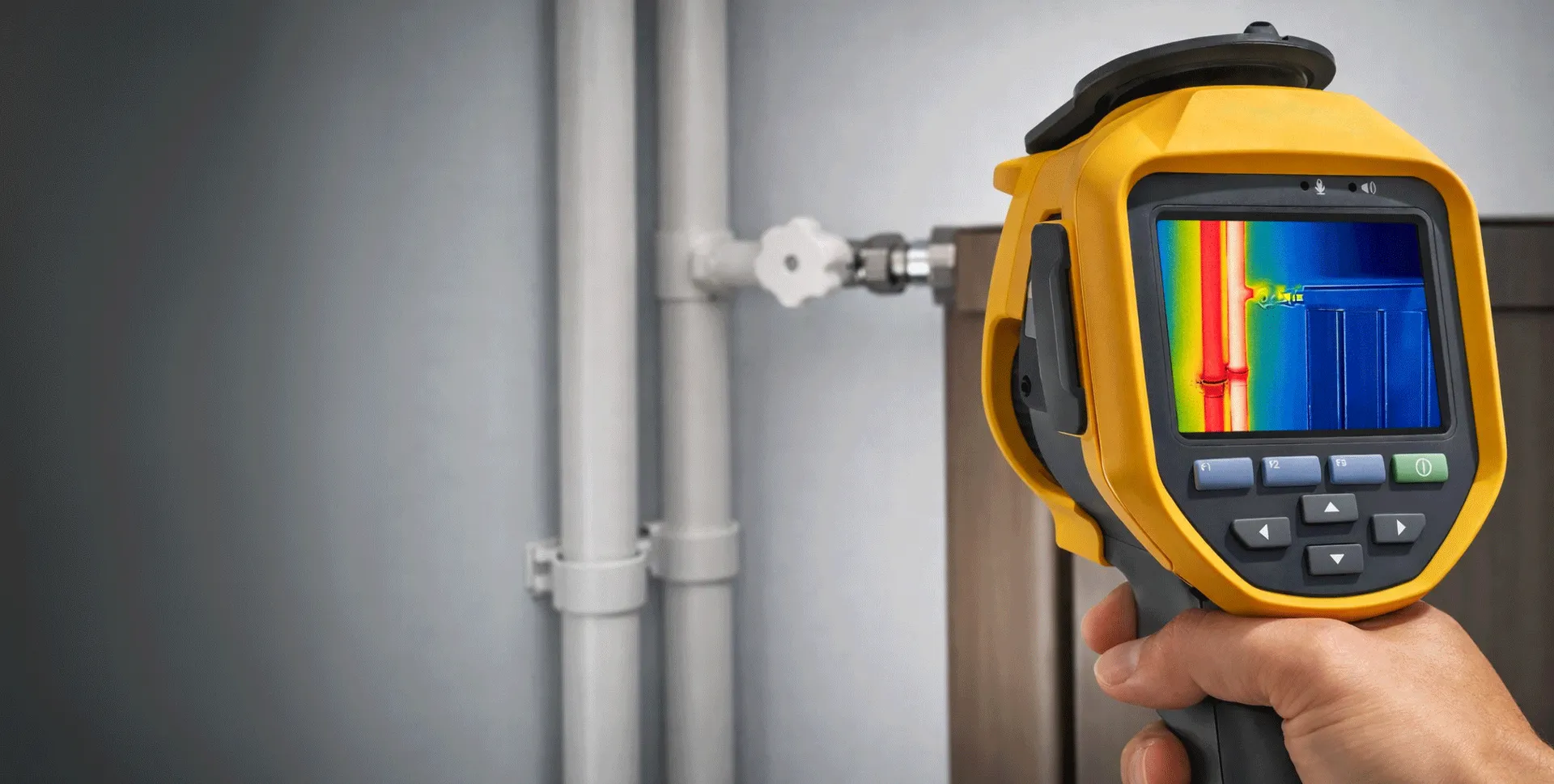
Our toolkit includes thermal imaging cameras, which display surface temperature variations as a color map. A leaking hot water line beneath a slab creates a warm zone on the floor above it. A cold water leak saturating drywall shows as a cooler area on the thermal image.
We pair thermal imaging with acoustic listening devices that amplify the hiss or drip of escaping water through concrete, tile, and wood. For buried yard lines, we use electronic line locators that trace the path of metallic and some non-metallic pipes so we know exactly where to listen and where to dig. Moisture meters round out the process by measuring moisture content in building materials to confirm wet areas and track how far water has spread.
Our team recently used this full equipment suite on a commercial building on East 8th Street in Odessa. The property manager had noticed water pooling in a utility closet but could not find the source. Our thermal camera traced a hot water line leak that had traveled 15 feet from the actual break point along a beam channel in the slab.
Without electronic detection, they would have cut into the slab in the wrong place.
When Electronic Detection Is the Right Choice
Electronic leak detection is the right approach whenever a leak is suspected but not visible. Common scenarios include rising water bills with no obvious drip, damp or warm spots on floors, walls that are wet at the base with no nearby fixture, and water meter movement when all fixtures are off. It is especially valuable for slab leak situations in Odessa, where cutting into a concrete foundation without precise location data means expensive concrete work and a bigger mess.
According to the Insurance Institute for Business and Home Safety, the average water damage claim runs $11,098. Spending a few hundred dollars on electronic detection to avoid unnecessary demolition and catch the problem early is a smart investment. Call Resolv Services at (432) 290-8511 to schedule electronic leak detection for your home or business.
Electronic Detection for Different Pipe Materials
The approach varies depending on what your pipes are made of. Metallic pipes like copper and galvanized steel respond well to electromagnetic line tracing, which lets us map the entire pipe path before scanning for leaks. PVC and PEX lines do not carry an electromagnetic signal, so we rely more heavily on thermal imaging and acoustic methods for these materials.
In older Odessa neighborhoods where homes may have a mix of original galvanized lines and newer PEX or copper repairs, we adjust our technique as we move through different sections of the plumbing system. We also account for Odessa's hard water, which causes mineral scale buildup inside pipes. Scale changes the acoustic signature of a leak and can mask thermal patterns, so experience reading the instruments in local conditions matters as much as the equipment itself.
Accurate Results Mean Fewer Surprises
The biggest advantage of electronic leak detection is accuracy. When we tell you the leak is at a specific spot, we are confident in that call because multiple instruments have confirmed it. That means your repair crew opens one targeted area instead of searching through your slab or walls.
It means less concrete removal, less drywall damage, and a faster repair timeline. For homeowners filing insurance claims, our detection report provides documentation of the leak location and the methods used to find it. Resolv Services stands behind our detection results.
If we say the leak is there, it is there. Call (432) 290-8511 to schedule your electronic leak detection.
How Electronic Leak Detection Works
System Pressurization
We pressurize the plumbing system and monitor the gauge for drops. This confirms an active leak exists and helps us determine which section of the system is losing pressure.
Thermal Imaging Scan
Using a thermal imaging camera, we scan floors, walls, and ceilings for temperature anomalies. Hot water leaks show as warm zones; cold water leaks and moisture migration show as cool patches.
Acoustic Detection
We place acoustic sensors on the floor and walls to listen for the sound of water escaping through pipe walls or fittings. The equipment amplifies sounds that are inaudible to the human ear and helps triangulate the leak position.
Line Tracing
For buried or hidden pipes, we use an electronic line locator to trace the pipe path through the slab or underground. This confirms we are scanning along the actual pipe route, not an adjacent area.
Moisture Mapping
We use electronic moisture meters to measure saturation levels in building materials around the suspected area. This creates a moisture map that distinguishes the leak origin from areas where water has simply traveled.
Electronic Detection vs. Exploratory Demolition
| Factor | Electronic Detection | Exploratory Demolition |
|---|---|---|
| Accuracy | Pinpoints leak within inches | May require multiple openings to find source |
| Property damage | No demolition needed for detection | Cuts through concrete, drywall, or flooring |
| Time to locate | 1-3 hours for most residential | Hours to days of cutting and searching |
| Cost | $200 - $650 for detection | Hundreds to thousands in demolition and patching |
| Insurance documentation | Detailed report with imaging | Difficult to document before opening walls |
| Repair scope | Targeted, minimal opening | Larger openings needed when location is uncertain |
More Leak Detection Services
Resolv Services provides electronic leak detection as part of our leak detection and repairs across West Texas.
Electronic Leak Detection
Get a written estimate for electronic leak detection — no obligation.
(432) 290-8511Frequently Asked Questions About Electronic Leak Detection
Yes. Our combination of thermal imaging, acoustic sensors, and moisture meters cross-references multiple data points to pinpoint leaks with high accuracy. In our experience across hundreds of Odessa homes, we locate the leak source on the first attempt in the vast majority of cases.
Yes. Thermal cameras detect temperature differences through tile, hardwood, laminate, and carpet. Acoustic sensors also work through these materials. The only flooring that sometimes reduces sensitivity is very thick stone tile, and even then, acoustic methods fill the gap.
Most residential electronic leak searches take 1 to 3 hours. Larger homes or commercial buildings with complex plumbing layouts may take longer. We provide a time estimate when you schedule the appointment.
If the leak is visible, like a dripping pipe under a sink, you do not need electronic detection. But if the leak is hidden behind a wall, under a slab, or underground, electronic detection saves you money by avoiding unnecessary demolition. We will advise you honestly on whether detection is needed.
Need Electronic Leak Detection?
Get a written estimate for professional electronic leak detection in the Permian Basin.
(432) 290-8511