Water Leak Detection & Repair
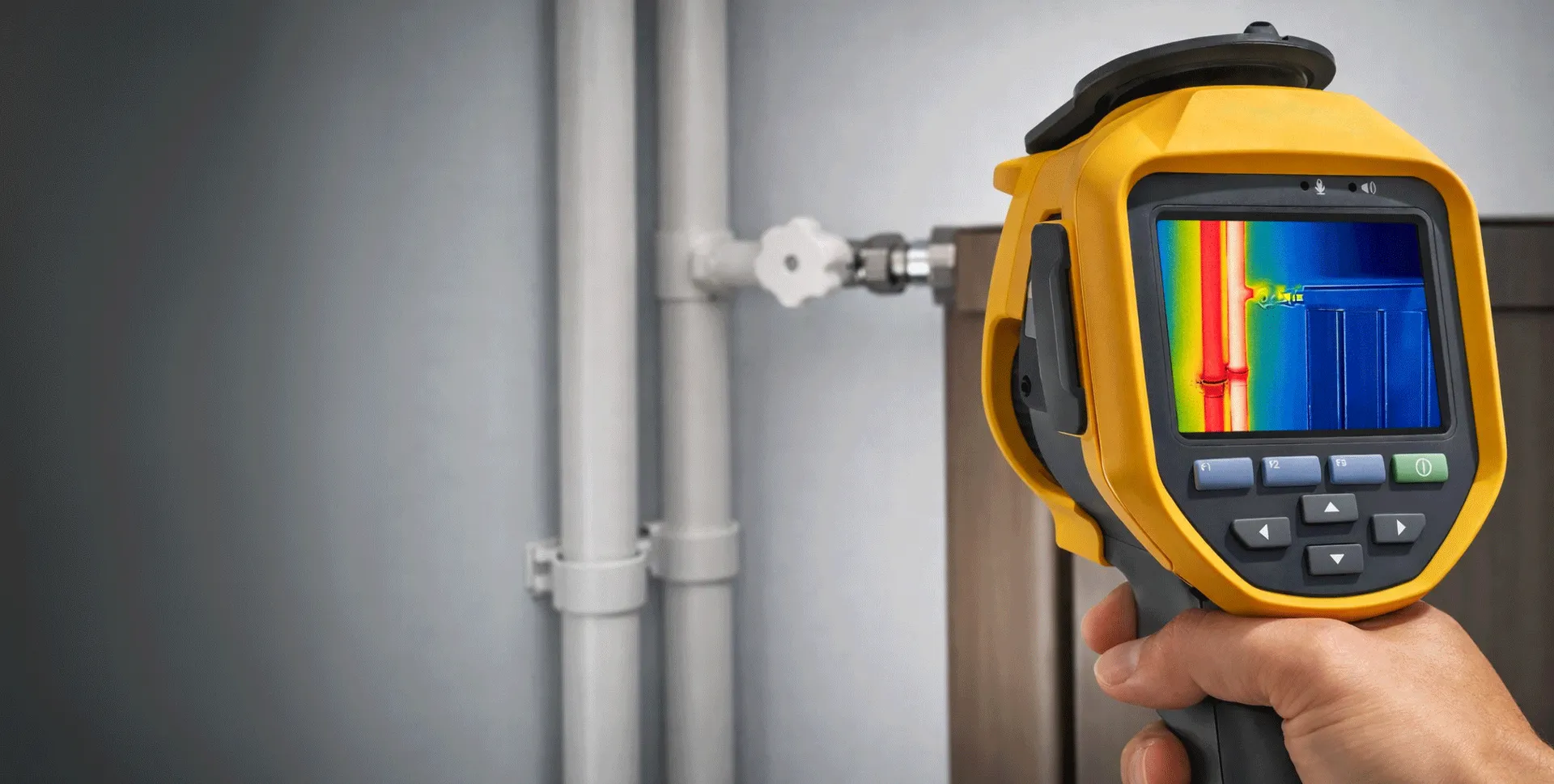
From hidden slab leaks to yard line failures, Resolv Services uses thermal imaging, acoustic listening equipment, and electronic line locators to find leaks fast and fix them right the first time. TX License #42668.
Fast Answer
Find Leak Detection Near You
Select your city for local pricing, availability, and service details.
Leak Detection and Repair Cost Ranges
| Service | Typical Cost Range |
|---|---|
| Electronic Leak Detection (Assessment) | $200 - $400 |
| Slab Leak Spot Repair (Single Point) | $800 - $2,500 |
| Slab Leak Reroute (Through Attic/Exterior) | $1,500 - $4,000 |
| Under-Slab Repipe (Full Home) | $4,500 - $10,000 |
| Yard/Water Line Repair (Spot) | $500 - $1,500 |
| Yard/Water Line Full Replacement | $1,500 - $4,500 |
| Hydrostatic Sewer Test | $250 - $500 |
Prices reflect our 2025-2026 project records. Final cost depends on leak location, depth, pipe material, and repair method. Call (432) 290-8511 for a free estimate.
Signs You Need Leak Detection Service
A hidden leak can waste 10,000 or more gallons per month. If your usage has not changed but your bill has jumped, a leak is the most likely cause.
If you hear water flowing through pipes with all fixtures and appliances shut off, water is escaping somewhere in your system.
A warm area on a tile or concrete floor usually means a hot-water supply line is leaking beneath the slab, heating the concrete above it.
Water from a slab leak saturates the soil under your foundation. As clay soil swells, it pushes against the slab and causes cracking in the foundation, walls, or both.
Moisture from a leak beneath the slab migrates upward through the concrete and damages flooring materials. Hardwood, laminate, and carpet padding are especially vulnerable.
A persistently wet area in an otherwise dry West Texas yard signals a leak in the supply line between the city meter and your home.
Mold can begin growing within 24 to 48 hours of sustained moisture. A musty smell near walls, cabinets, or flooring often indicates a hidden leak feeding mold growth.
Turn off every fixture and appliance in your home, then check your water meter. If the dial or digital indicator is still moving, water is leaving your system through a leak.
Leak Detection Services We Provide
Water Leak Detection →
Our systematic detection process starts with a whole-system pressure test to confirm the leak exists, then isolates individual zones to narrow the location. Using thermal imaging, acoustic listening equipment, and moisture meters, we pinpoint the leak within inches — without tearing up your property. Most assessments take one to two hours.
Electronic Leak Detection →
For leaks that resist standard detection methods, we deploy specialized electronic equipment that can find hairline cracks invisible to thermal or acoustic tools. Advanced sensors and signal amplification technology trace the exact failure point with pinpoint accuracy, even in complex piping layouts.
Yard Leak Detection →
The water line from the city meter to your home is your responsibility. A failure in this line wastes enormous volumes of water before you notice the problem. We use electronic line locators and acoustic detection to find underground leaks, then repair or replace the damaged section with materials rated for alkaline soil conditions.
Slab Leak Repair →
Slab leaks occur in the supply or drain pipes beneath your concrete foundation. We offer three repair strategies — spot repair through the slab, rerouting through the attic or exterior walls, and full under-slab repiping — and explain the pros, cons, and cost of each so you can make an informed decision. All repairs include a final pressure test to 80 PSI.
Water Line Repair and Replacement →
When a yard line or main supply line has failed in multiple locations, a full replacement with HDPE or PEX piping is often more cost-effective than repeated spot repairs. We also repair and replace meter boxes, shut-off valves, and water main connections. Most single-line replacements are completed in a day.
Direct Access vs. Reroute — Choosing the Right Slab Leak Repair
When a slab leak is confirmed, homeowners face a critical decision: repair through the slab or bypass it entirely. The right answer depends on pipe material, leak location, number of failure points, and the condition of the rest of the under-slab piping system.
A spot repair (direct access) works well for isolated, single-point failures. The plumber cuts through the slab at the leak location, repairs or replaces the damaged section, backfills, and patches the concrete. It is the least expensive option for a one-time failure in otherwise sound piping. However, if the pipe material is corroding systemically — as is common with pre-1980 copper in hard-water areas — a spot repair may simply be delaying the next failure by six to twelve months.
A reroute abandons the damaged under-slab line and runs a new supply line through the attic or along exterior walls, bypassing the slab entirely. This eliminates the failing section from service without cutting into your foundation. Reroutes cost more than a spot repair but less than a full repipe, and they eliminate the risk of future slab damage from that line.
A full under-slab repipe replaces all under-slab supply lines and is the right choice when multiple leaks indicate systemic pipe deterioration. Homes with two or more slab leaks within a two-year period are strong candidates. While the upfront cost is highest, a full repipe with Uponor PEX-A eliminates the under-slab leak risk entirely and typically adds value to the home.
Spot Repair vs. Reroute vs. Full Repipe
| Factor | Spot Repair | Reroute | Full Repipe |
|---|---|---|---|
| Best for | Single isolated leak | Repeat slab leaks in one area | Systemic pipe deterioration |
| Typical cost | $800 – $2,500 | $1,500 – $4,000 | $4,000 – $9,000 |
| Disruption | Concrete cut at leak site | Minimal — new line through attic/walls | Moderate — replaces all under-slab lines |
| Time to complete | Same day | 1 – 2 days | 2 – 3 days |
| Future leak risk | Other sections still aging | Bypassed section eliminated | Eliminated for all supply lines |
| Pipe material used | Copper or PEX splice | PEX-A (Uponor) | PEX-A (Uponor) |
| Home value impact | Neutral | Slight positive | Strong positive |
| Warranty | 1 year on repair | Lifetime on PEX-A | Lifetime on PEX-A |
Protecting Your Home from Water Leaks
The Permian Basin's combination of hard water, expansive clay soil, and extreme temperature swings creates a trifecta of conditions that stress residential plumbing systems year-round. Prevention is not about eliminating every risk — it is about catching problems early enough that a $200 detection visit prevents a $10,000 slab leak repair.
Start with the basics: know where your main shutoff valve is and test it once a year to confirm it still closes fully. Check under sinks and around toilet bases for moisture, mineral deposits, or discoloration every few months. Monitor your water bill for unexplained increases — a jump of $20 or more without a change in usage patterns warrants investigation. If your home has a water softener, maintain it properly; unsoftened hard water accelerates pipe corrosion from the inside.
For homes built before 1980, proactive monitoring matters even more. These homes are more likely to have copper supply lines under the slab that have been weakened by decades of hard-water exposure and soil movement. A professional pressure test every two to three years can catch developing leaks before they saturate the soil and damage your foundation. The Insurance Institute for Business & Home Safety reports that the average water damage claim is $11,098 — an inspection that costs a fraction of that amount is one of the smartest investments a homeowner can make.
How Our Leak Detection Process Works
Report the Leak
Call us or submit a request. Describe what you're seeing — high bill, wet spot, sound of running water — so we arrive prepared.
Electronic Detection
We use acoustic sensors, thermal cameras, and pressure testing to pinpoint the leak location without guesswork.
Confirm & Explain
We show you exactly where the leak is and explain the repair options — direct access vs. reroute — with pros and cons of each.
Written Estimate
You receive a clear estimate before any work begins. No pressure, no surprises.
Repair & Restore
We fix the leak using the agreed-upon method, test the repair, and restore the area as close to original as possible.
Verify & Document
Final pressure test confirms the repair. You receive documentation and warranty information in writing.
24/7 Emergency Leak Detection Service
What Counts as an Emergency
- ●Active water leak flooding your home or building
- ●Burst pipe inside a wall, ceiling, or under the slab
- ●Water pooling around your foundation or in crawl spaces
- ●Water meter spinning rapidly with no fixtures running
- ●Visible foundation shifting or cracking from water damage
What to Do Right Now
Shut off the water supply to the affected area if safe. If you smell gas, evacuate and call 911 first. For sewer backups, stop all water use in the building. Then call us.
(432) 290-8511Why Water Leaks Demand Immediate Attention
According to the EPA, household leaks waste nearly 1 trillion gallons of water annually across the United States. In the Permian Basin, the problem is compounded by expansive clay and caliche soil that swells when it absorbs moisture and shrinks during drought. This constant soil movement stresses supply lines running under concrete slab foundations, creating leaks that can go undetected for weeks.
The Insurance Institute for Business & Home Safety reports that the average water damage insurance claim is $11,098. A hidden leak does not just waste water — it damages flooring, promotes mold growth within 24 to 48 hours, and can undermine your home's foundation. Resolv Services LLC holds Texas Plumbing License #42668 and specializes in leak detection and repair.
We use professional-grade detection equipment to find leaks accurately without unnecessary demolition.
Accurate Detection, Targeted Repair
Not every leak announces itself with a puddle. Many of the most damaging leaks hide beneath slabs, inside walls, or underground where they run for weeks before anyone notices. Our systematic approach starts with a pressure test of the entire system, then isolates individual sections until the source is confirmed.
Thermal imaging cameras detect temperature differences caused by hot-water leaks under concrete. Acoustic listening devices amplify the sound of pressurized water escaping through pipe walls. Electronic sensors pinpoint hairline cracks that other methods miss.
Accurate detection means less digging, less drywall removal, and a faster, more affordable repair. Call (432) 290-8511 to schedule a leak detection assessment.
Accurate leak detection requires specialized equipment, not guesswork. Resolv Services invests in professional-grade detection tools that pinpoint leaks quickly and reduce the need for exploratory demolition. Thermal imaging cameras detect temperature anomalies in floors, walls, and ceilings caused by hot-water line leaks hidden behind building materials.
Acoustic listening devices amplify the sound of water escaping through pipe walls under concrete slabs, allowing us to mark the leak location on the surface. Electronic line locators trace the path of metallic and non-metallic pipes underground so we know exactly where to access the line for repair. Moisture meters measure moisture content in wood, drywall, and concrete to confirm water migration patterns and the extent of damage.
This equipment allows us to locate most leaks within one to two hours without cutting into floors or walls.
The Permian Basin sits on expansive clay and caliche soil that swells when saturated and shrinks during drought. West Texas averages only 14 inches of rainfall per year, but when rain comes it often arrives in heavy bursts that saturate the soil rapidly. This wet-dry cycle creates ground movement that stresses rigid pipe materials running under and around your foundation.
Copper supply lines develop pinhole leaks at stress points. CPVC joints crack where soil movement creates shear force. PVC sewer lines develop offset joints and bellies that trap waste and eventually leak.
The February 2021 Winter Storm Uri added another layer of damage — thousands of Permian Basin homes suffered burst pipes during the extended freeze, and many of those repairs revealed pre-existing deterioration that the freeze pushed past the failure point. If your home was built before 1990 and you have not had the under-slab plumbing inspected, a professional evaluation with pressure testing and camera inspection is a smart investment.
Many homeowners insurance policies cover sudden and accidental water damage, including slab leaks and burst supply lines, but coverage depends on the specific policy language and the cause of the leak. Most policies do not cover gradual deterioration or damage caused by deferred maintenance. Resolv Services provides detailed documentation for every leak detection and repair project — including photos, pressure test results, a description of the failure cause, and a written scope of the repair performed.
This documentation supports your insurance claim by establishing that the damage was sudden and accidental rather than gradual. We recommend contacting your insurance company as soon as a leak is confirmed. Some policies require the insured to mitigate further damage promptly, which means shutting off the water supply and beginning repairs in a reasonable timeframe.
Our emergency response and same-day scheduling help you meet that obligation. We also work with restoration companies when water damage requires drywall, flooring, or mold remediation beyond the scope of the plumbing repair itself.
The Permian Basin's geology creates plumbing challenges that homeowners in other parts of the country rarely face. The expansive clay and caliche soil beneath the region's foundations swells when saturated and shrinks during drought. This constant soil movement stresses the copper, CPVC, and PVC supply lines running under concrete slab foundations.
Odessa's aggressive mineral water accelerates corrosion inside copper pipes, compounding the mechanical stress from soil movement. According to the U.S. Census Bureau, more than 35% of Ector County homes were built before 1980, an era when builders routinely ran soft copper supply lines under slabs without accounting for soil movement.
The region's extreme temperature range — from 110-degree summers to occasional hard freezes — expands and contracts pipe materials in ways that accelerate fatigue at joints and fittings. Understanding these conditions is why local expertise matters: a plumber who knows the region's soil, water, and climate can anticipate failure modes that an out-of-area contractor might miss.
Common Questions About Leak Detection
Common signs include the sound of running water when all fixtures are off, hot spots on the floor (indicating a hot-water line leak beneath the slab), cracks in the foundation or walls, unexplained increases in your water bill, and damp or warped flooring. If you notice any of these symptoms, call Resolv Services at (432) 290-8511 for a professional leak detection assessment before the damage gets worse.
The region's expansive clay and caliche soils are the primary cause. These soils swell when they absorb moisture and shrink during dry periods, creating movement that stresses the copper and CPVC supply lines running under your foundation. More than 35% of homes in the area were built before 1980, when builders routinely installed soft copper under slabs without accounting for soil movement. The area's very-hard water also accelerates corrosion inside copper pipes, compounding the problem.
In most West Texas municipalities, the homeowner is responsible for the water supply line from the city meter to the house. The city maintains the main and the meter itself, but everything on your side of the meter is your responsibility to repair and maintain. A small underground leak in this line can waste thousands of gallons per month and create soil erosion that affects your foundation.
Slab leak repair costs vary based on the repair method. A spot repair through the slab for an isolated leak typically runs $800 to $2,500. A reroute through the attic or exterior walls costs $1,500 to $4,000. A full under-slab repipe for homes with multiple leaks ranges from $4,500 to $10,000. These prices reflect our 2025-2026 project records. Call (432) 290-8511 for a free estimate specific to your situation.
Most electronic leak detection assessments take one to two hours. We start with a pressure test to confirm the leak, then use thermal imaging, acoustic listening devices, and electronic locators to pinpoint the exact location. You receive a full report of our findings before we discuss repair options.
Yes. Water from a slab leak saturates the expansive clay soil beneath your foundation. As the clay absorbs water, it swells and pushes upward against the slab, causing cracks in the foundation, walls, and flooring. The Insurance Institute for Business & Home Safety reports that the average water damage insurance claim is $11,098, and foundation repairs caused by prolonged slab leaks can add thousands more. Early detection and repair is always less expensive than waiting.
It depends on the pipe material, number of failure points, and condition of the rest of the under-slab system. A spot repair through the slab is the least expensive option for an isolated failure in otherwise sound piping. A reroute is the better investment when the pipe material is corroding systemically or when you have had multiple slab leaks within a two-year period. We present all options with costs and pros/cons so you can make an informed decision.
Many policies cover sudden and accidental water damage, including slab leaks, but coverage depends on your specific policy language and the cause of the leak. Most policies do not cover gradual deterioration or deferred maintenance. We provide detailed documentation — photos, pressure test results, failure cause, and repair scope — to support your insurance claim. Contact your insurance company as soon as a leak is confirmed.
Need Leak Detection? Let's Talk.
Get a written estimate for leak detection — no obligation, no surprises.
TX #42668 — Serving the Permian Basin